

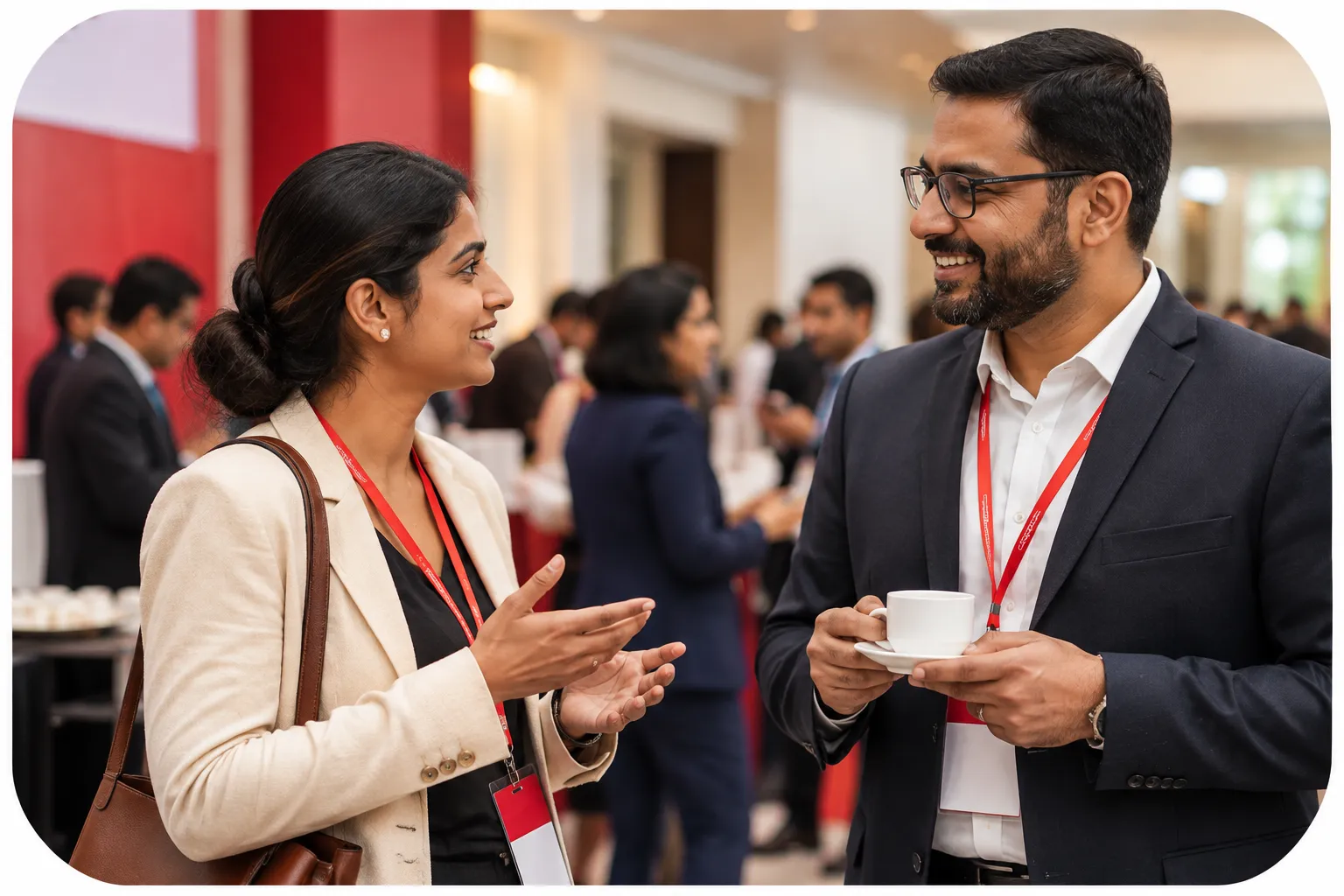
Networking gives conference participants the opportunity to exchange knowledge, discover shared interests and develop professional relationships. Thoughtful event planning can make these interactions more comfortable and productive.
Design spaces for conversation
Provide suitable areas where participants can speak without competing with presentations or excessive background noise. Consider seating arrangements, accessibility and the expected number of attendees.
Give networking a structure
Topic-based discussions, small-group introductions and facilitated networking activities can help participants begin conversations. Communicate the format in advance so attendees know what to expect.
Support connections with digital tools
An event platform can share speaker biographies, session topics and networking schedules. Where participant directories or messaging are offered, provide appropriate privacy controls and let attendees choose how they participate.
- Schedule dedicated networking breaks.
- Offer topic-based discussion opportunities.
- Make networking areas easy to locate.
- Provide accessible event and session information.
- Encourage respectful and inclusive conversations.
Keep connections going
Follow-up resources, shared session materials and optional professional groups can help participants continue conversations after the conference. Make follow-up communication relevant and respectful of attendee preferences.